Connections
Church & Religious Works
Devotional sculpture across Ireland
Alongside his revolutionary portraits and public memorials, Albert G. Power produced a substantial body of ecclesiastical and devotional work for churches, cathedrals, colleges, and religious institutions across Ireland. These commissions — in Portland stone, limestone, marble, and granite — represent a quieter, more contemplative dimension of his practice, and many remain in situ in buildings open to visitors today.
Power was a devout Catholic whose nationalist and religious convictions were inseparable. He spoke publicly at the Academy of Christian Art in 1936 about his approach to devotional sculpture, arguing that Irish artists should use native materials and seek subjects rooted in Irish spiritual life. This page documents confirmed religious commissions outside his secular portrait and monument work.
Dublin — Glasnevin Cemetery
Glasnevin is one of the most significant sites of Power's work in Ireland. He produced multiple funerary monuments there over several decades, designed the unfinished Young Irelanders monument (1938), and is himself buried there alongside many of the figures he commemorated in bronze and stone.
Donegal
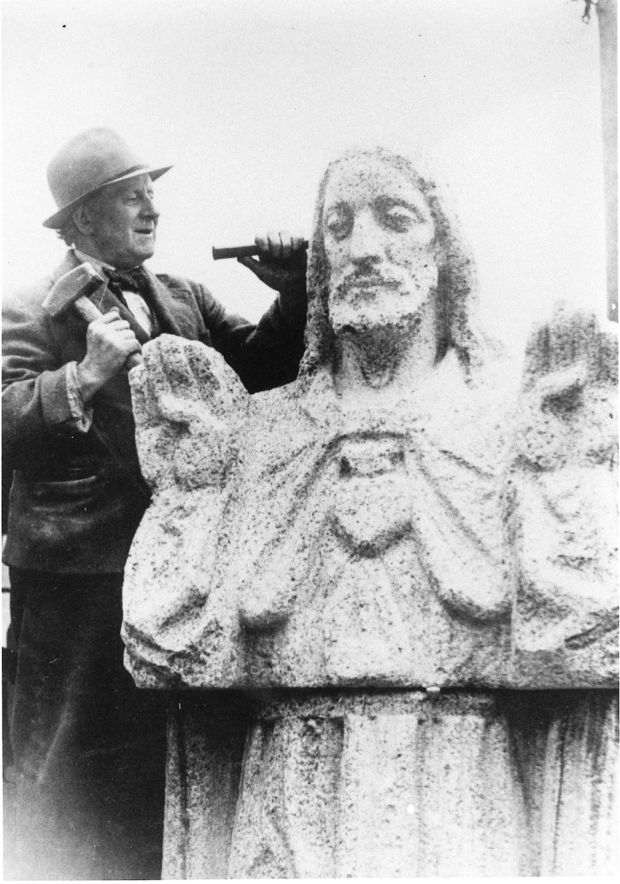
Christ the King Church, Carndonagh — Four works
Granite · Dome of Christ the King Church, Carndonagh, Co. Donegal
Power's last major commission, executed in the final two years of his life. He carved four figures in granite for the Christ the King Church on the Inishowen Peninsula — one of the oldest Christian sites in Ireland. The three patron saints of Ireland stand at the corners of the church dome; the Sacred Heart figure was the last work photographed in progress in his Berkeley Road yard before his death in July 1945.
- St Patrick, 1943–5, granite — dome, north corner
- St Brigid, 1943–5, granite — dome, south corner
- St Colmcille, 1943–5, granite — dome, east corner
- Statue of the Sacred Heart, 1945, stone — interior/facade
Source: Judith Hill monograph; photograph in The Standard, 1945. Collection: Christ the King Church, Carndonagh.
Dublin
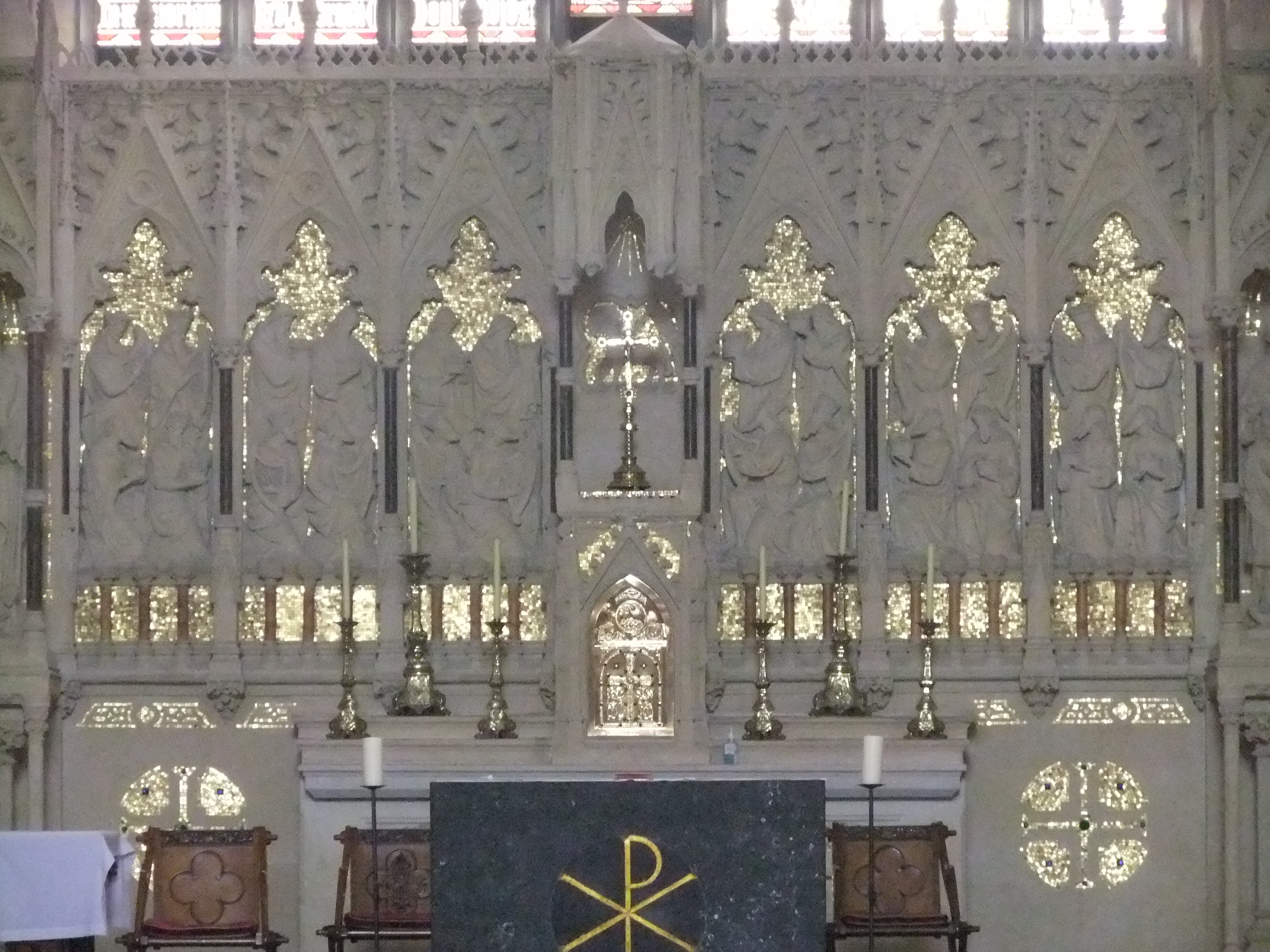
St Catherine's Church, Meath Street — Altar & Reredos
Stone · St Catherine's Church, Meath Street, Dublin 8
Power worked in collaboration with the artist Jack Morrow on an altar and reredos for St Catherine's Church on Meath Street, in Dublin's Liberties — one of relatively few documented instances of Power partnering directly with another named artist on a single ecclesiastical scheme.
St Catherine's parish is one of the oldest in Dublin, dating back roughly 800 years to the 13th century. The present church building was constructed in 1852, and has been in the care of the Augustinian Order since 1974. Power and Morrow's elaborate gilded reredos — featuring carved figures and gold mosaic panels — sits behind the high altar beneath the church's great rose window. A marble statue of St Catherine, with her traditional attribute of the wheel, stands within the reredos scheme.
Photographs: Power family archive.
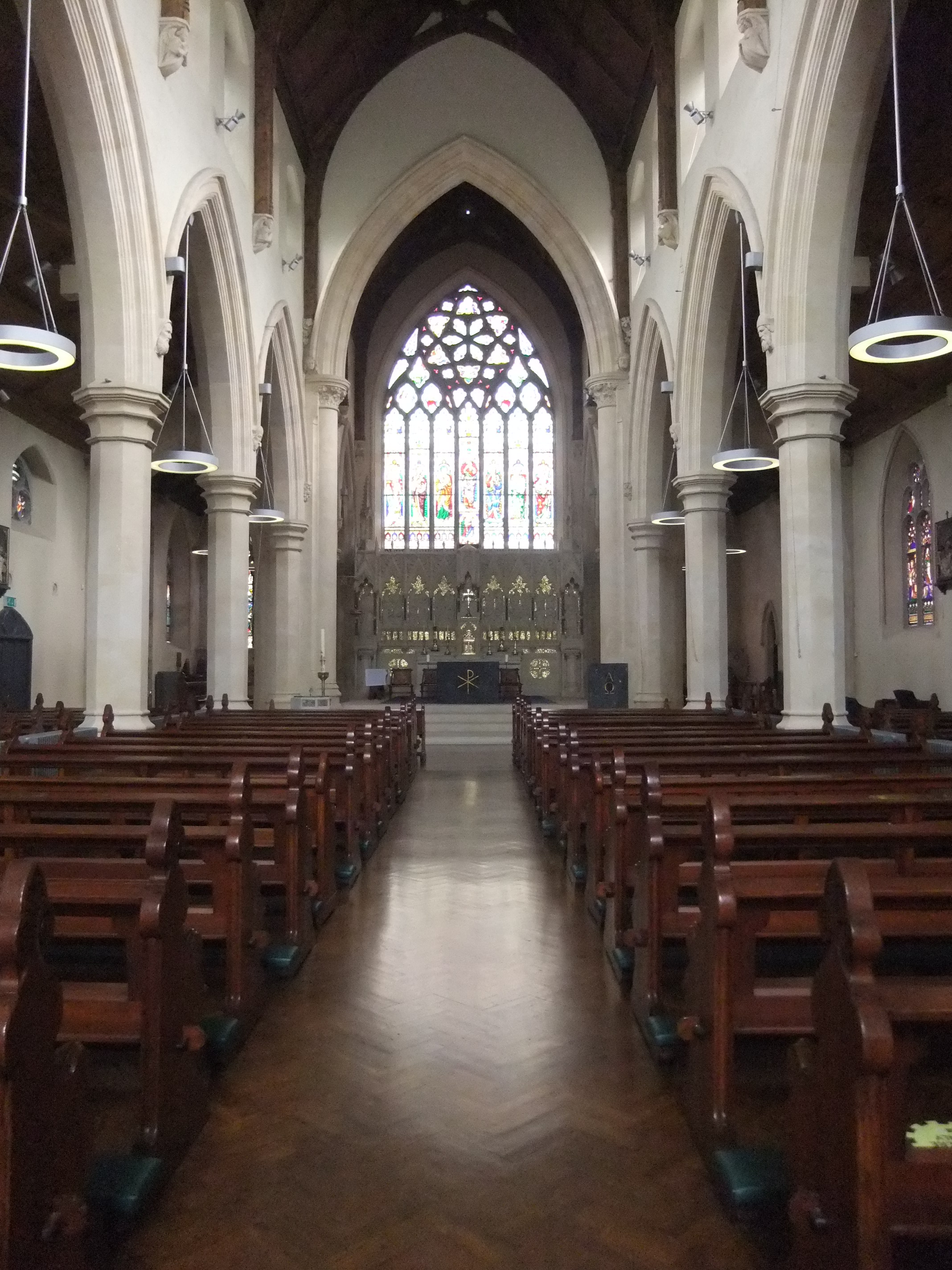
St Catherine's Church — Nave View
St Catherine's Church, Meath Street, Dublin 8
The full nave of St Catherine's, looking toward the high altar and the Power/Morrow reredos beneath the great traceried window. The church's Gothic Revival interior, completed in 1852, provides the setting for Power's 1920 ecclesiastical commission.
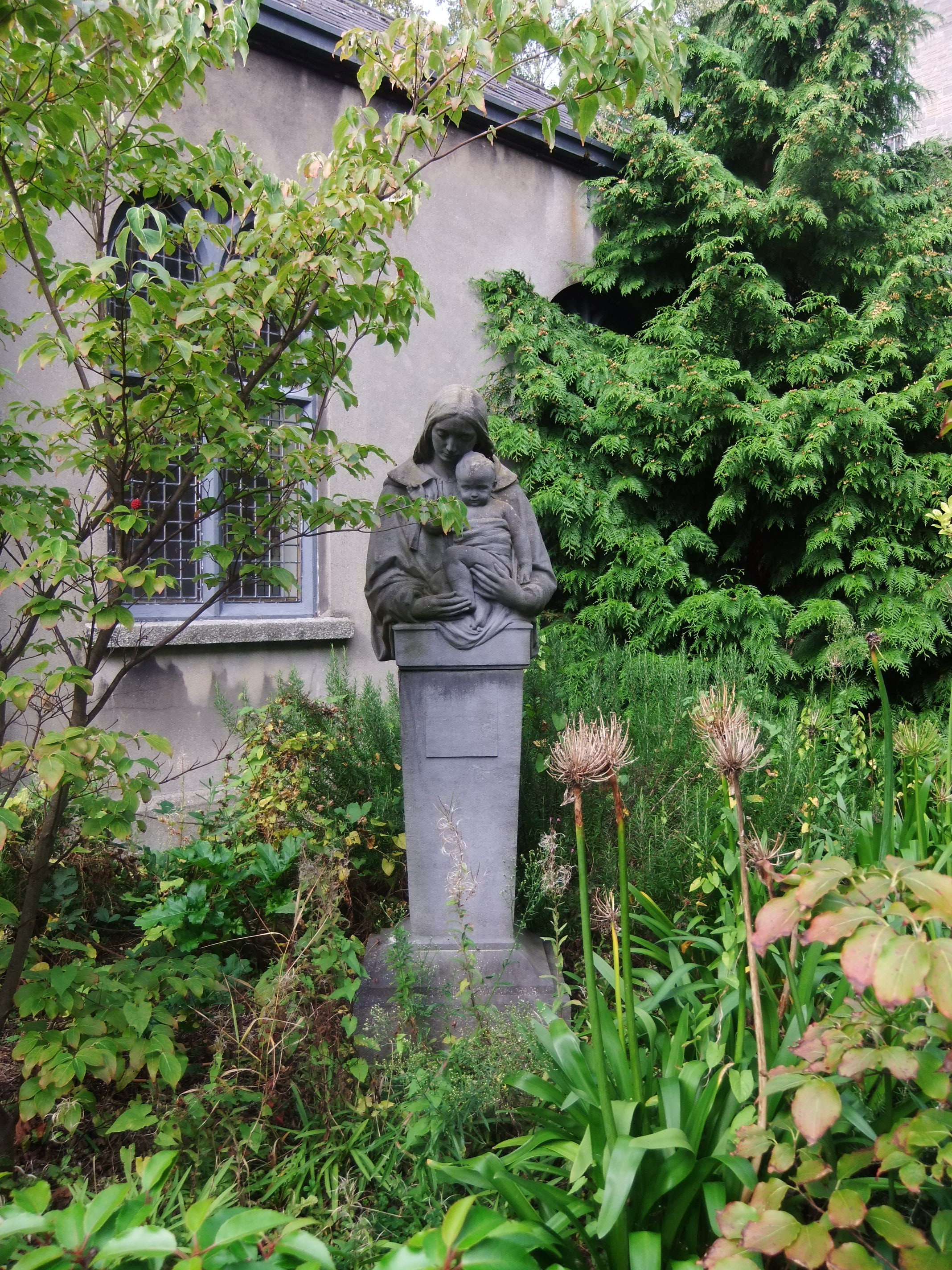
Madonna and Child
All Hallows College, Grace Park Road, Drumcondra, Dublin
Power displayed photographs of the Madonna and Child at All Hallows at his 1936 talk to the Academy of Christian Art, alongside his secular busts and public monuments, as a key example of his religious work. Date of original commission unconfirmed.
Portrait of Dr Bethel Solomons
Bronze · Rotunda Hospital, Parnell Square, Dublin
Portrait bust of Dr Bethel Solomons (1885–1965), Master of the Rotunda Maternity Hospital from 1925, celebrated gynaecologist, former Ireland rugby international, and supporter of the Easter Rising. Solomons commented it was a fine likeness. Shown at the RHA exhibition in 1934.
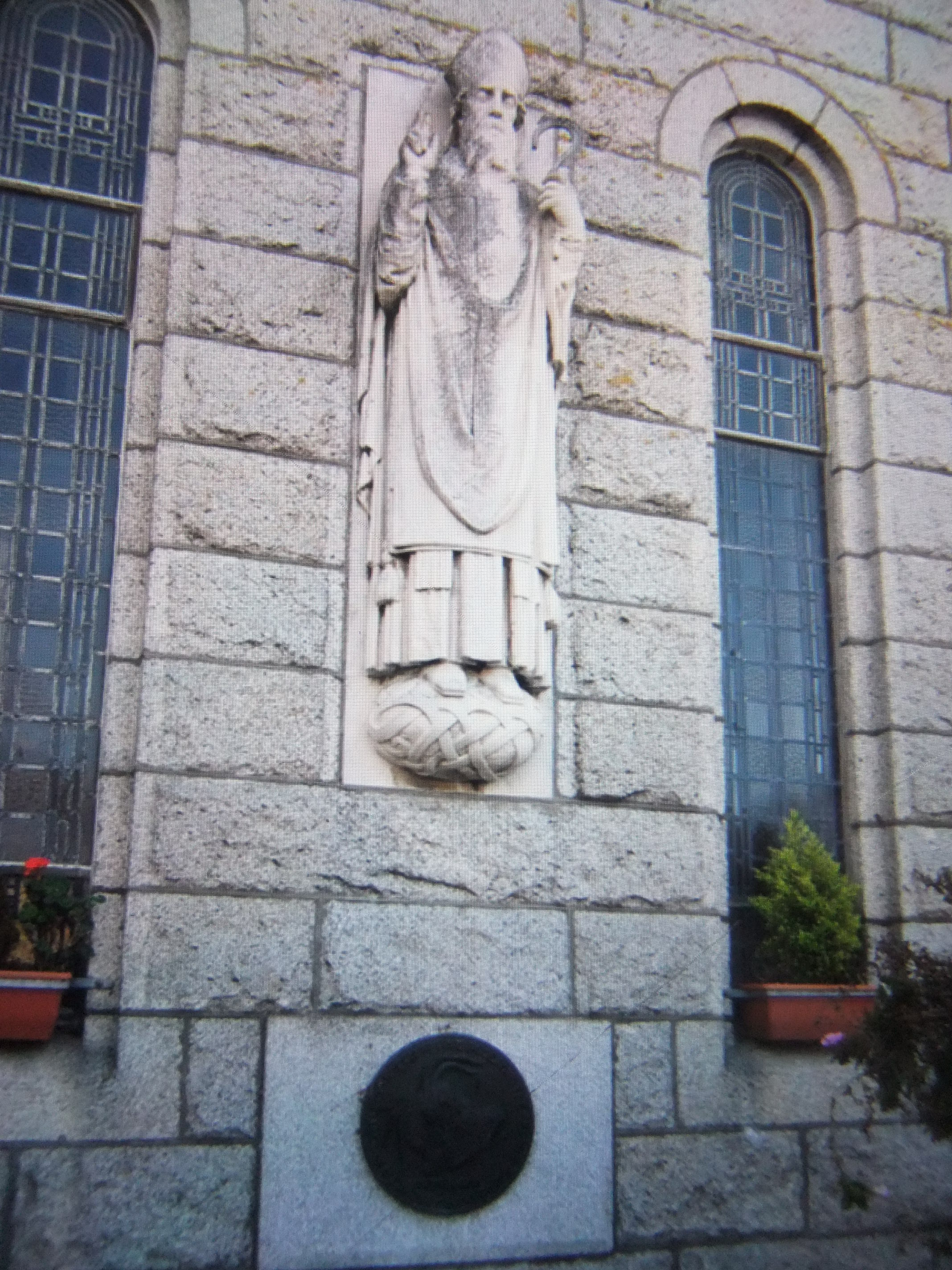
Statue of St Patrick — the hidden goat
Portland stone · St Patrick's Church, Skerries, Co. Dublin
Carved in situ on a scaffold on the exterior façade of the new St Patrick's Church, Skerries, designed by architect J.J. Robinson and consecrated in 1939. Power argued for Skerries limestone but Portland stone was chosen as cheaper.
Power discovered during the commission that local legend held St Patrick had visited Skerries and that someone had stolen one of his goats — giving rise to the centuries-old taunt "Skerry Goats." He secretly carved a goat's head projecting from the Celtic interlace base. After the church opened, the Archbishop of Dublin was displeased. The goat remains to this day.
Galway
Christ the King, Gort
Marble · Market Square, Gort, Co. Galway
A life-size marble figure of Christ the King in Market Square, Gort. One of Power's major religious works in the round, executed in marble. The statue was recently restored in 2024. Gort is close to Coole Park and Thoor Ballylee — the heart of Yeats country Power knew well through his 1939 Yeats portrait commission.
Sources: Wikipedia; Clare Echo, August 2024; Galway Advertiser.
St Joseph and Christ Child
Limestone · St Joseph's College, Garbally, Ballinasloe, Co. Galway
A limestone grouping of St Joseph with the Christ Child, carved for the grounds of St Joseph's College, Garbally, near Ballinasloe — a diocesan college run by the Diocese of Clonfert. One of two versions Power made of this subject; he also produced an earlier marble version for Foxford, Co. Mayo (late 1920s). The tender treatment of the Christ Child is characteristic of Power's devotional work at its most assured.
Source: Síghle Bhreathnach-Lynch, Expressions of Nationhood in Bronze & Stone. Photograph © Síghle Bhreathnach-Lynch.
Mayo
St Joseph and Christ Child
Marble · Convent of Divine Providence, Foxford, Co. Mayo
An earlier marble version of the St Joseph and Christ Child subject, carved for the Convent of Divine Providence in Foxford — the convent associated with the Sisters of Charity and the famous Foxford Woollen Mills. This is among Power's finer religious works in marble, demonstrating the range he maintained between his harder carved stone commissions and his modelled bronze portraits. An almost identical limestone version was made for Garbally College in 1941.
Source: Síghle Bhreathnach-Lynch, Expressions of Nationhood in Bronze & Stone. Photograph © Síghle Bhreathnach-Lynch.
Kerry
Pikeman
Limestone · Denny Street, Tralee, Co. Kerry
A full-length figure of a pikeman commemorating those who fought and died in the 1798 rebellion. Power replaced the original centenary statue toppled from its plinth by the Black and Tans in 1921. He gave the work a deeply personal ideological statement, placing the figure on tree roots to symbolise a man who had lost everything yet stands on his claim to right and justice.
Sligo
Statue of Bishop Laurence Gillooly
Limestone · Gillooly Hall, Temple Street, Sligo
Full-length figure of Bishop Laurence Gillooly (1858–1895), Bishop of Elphin, on the front elevation of the Community Hall opposite St Mary's Cathedral, Sligo. Completed April 1937, unveiled May 1937 by Dr Edward Dooly, the resident Bishop of Elphin. Power worked from photographs and oil paintings. The crozier was carved from a replica owned by the deceased.
Co. Louth
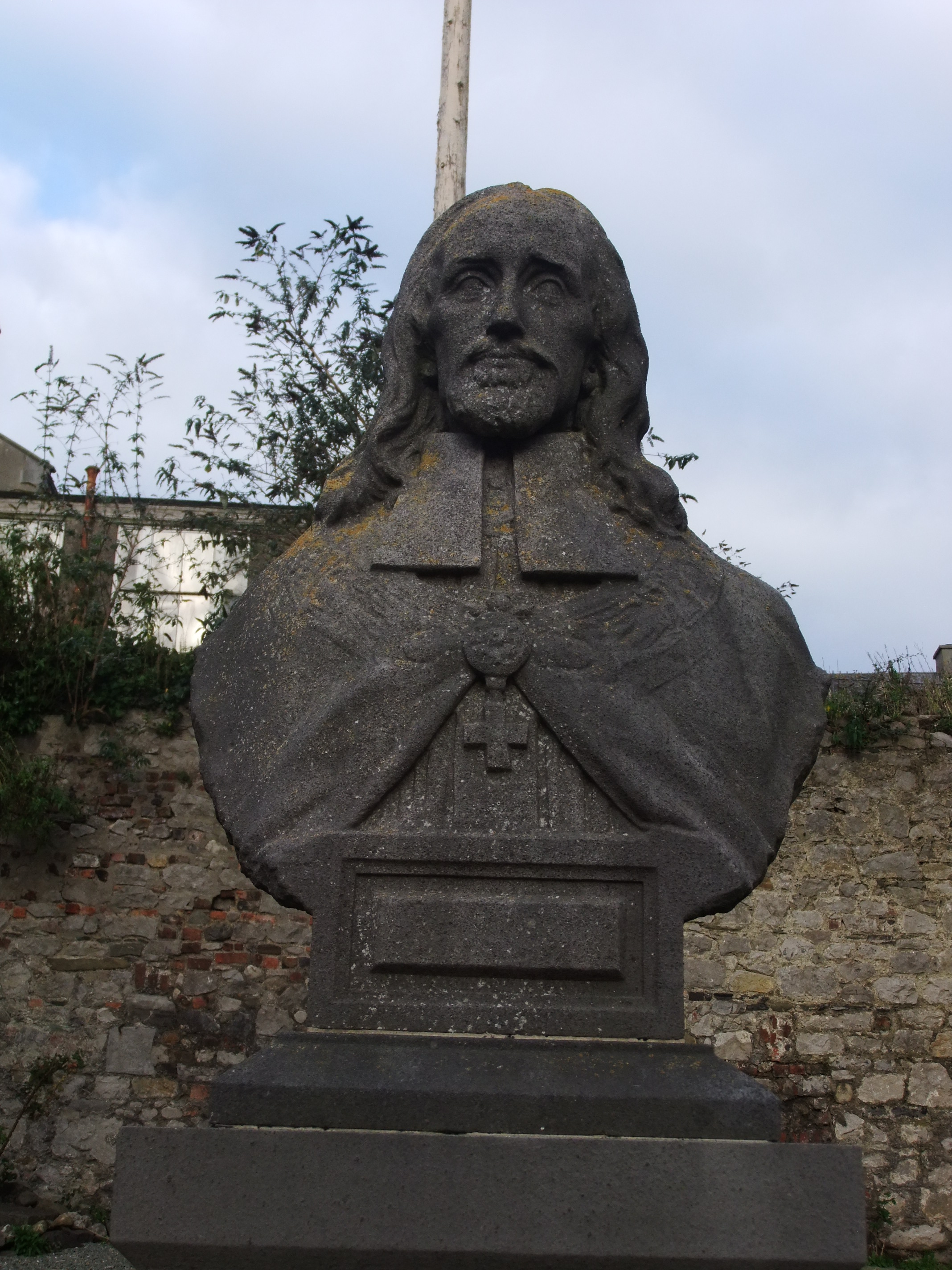
Bust of the Venerable Oliver Plunkett — two versions
Limestone (1921) & marble (1942) · St Peter's Church, Drogheda, Co. Louth
Power made two busts of the Venerable Oliver Plunkett, decades apart. The earlier, in limestone, was carved in 1921 for St Peter's Church, Drogheda — home to Plunkett's preserved head, one of the most visited Catholic relics in Ireland. The second, in marble in 1942, departed from conventional portraiture to depict the moment of the saint's martyrdom: head severed at the neck, eyes closed, expression of peace. A contemporary Irish Times reviewer described the 1942 work as radiating "an extraordinary intensity and dramatic power... one of our great sculptor's achievements."
Photograph (1921 bust): Power family archive. Source for 1942 bust: Judith Hill monograph.
Pending Research
The following locations have been identified as holding Power commissions but require further confirmation or documentation:
- Mullingar Cathedral — tympanum carving (date unconfirmed; source: Judith Hill monograph). Map pin to be added once geocoded.
- Pro-Cathedral, Dublin — Power exhibited religious works and was connected to the Pro-Cathedral's circle; specific commission unconfirmed.
Power produced many ecclesiastical works in churches across Ireland, particularly devotional figures and altarpiece reliefs, which are not yet fully documented here. If you have information about works in your local church or institution, please get in touch.