Son of Albert Power
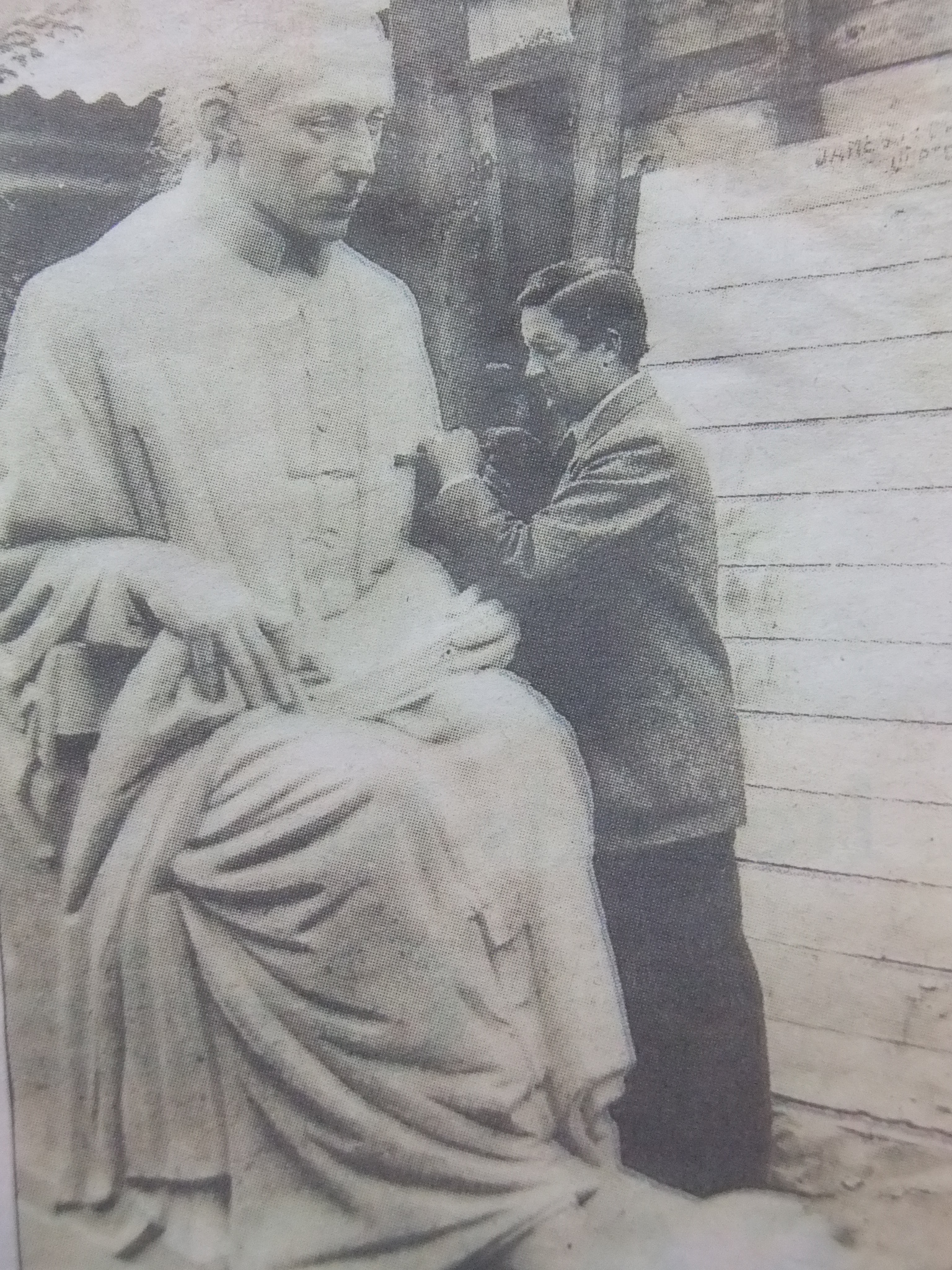
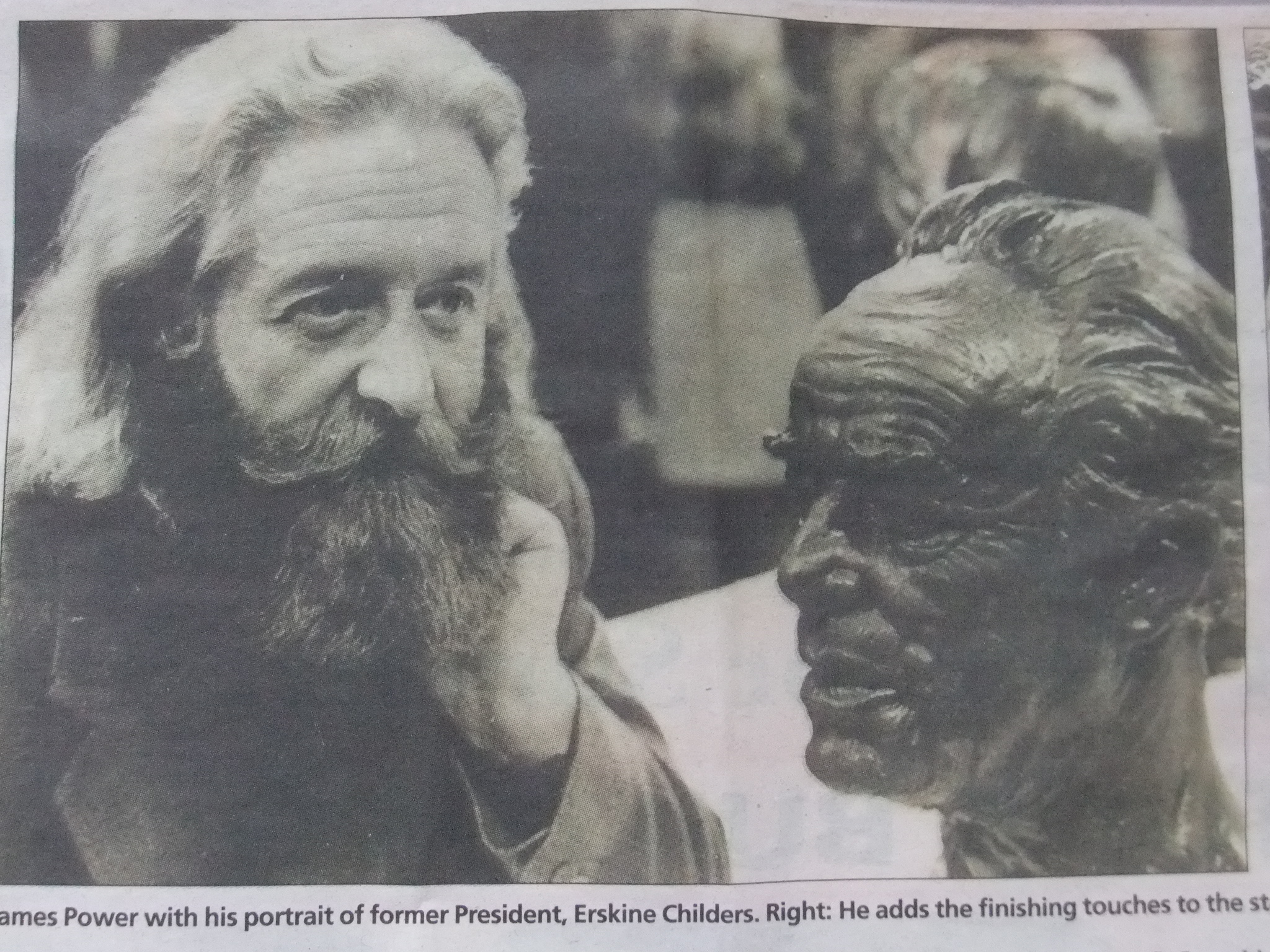
James Power was the son of Albert George Power RHA and his wife Agnes (née Kelly), and one of three brothers — alongside Albert Jr. (1912–1973) and Oliver (b. 1913) — who followed their father into sculpture. James continued to live at 18 Geraldine Street, Phibsboro, the family home, and worked as a sculptor across six decades. He died on 13 April 2009 at the Mater Hospital, survived by his brother Christopher Noel, sister-in-law, nieces and nephews. His death notice in The Irish Times described him simply as "sculptor and dedicated artist."
Where his father Albert had worked at the hinge point of the revolutionary period — making death masks of Collins, Griffith, and Brugha — James worked through the consolidation of the Irish state, producing busts and commemorative sculptures through which the new Ireland marked its own history.
Pádraic Ó Conaire's Headstone, Bohermore Cemetery
A decade after his father's death, James Power created the headstone for Pádraic Ó Conaire's grave at Bohermore Cemetery, Galway — continuing a connection between the two families that began when Albert Power was commissioned to create the celebrated Ó Conaire memorial statue in Eyre Square, unveiled in 1935. Where his father's statue commemorated Ó Conaire in bronze and limestone for the city of Galway to see, James's headstone marks the writer's actual grave.
Source: Galway City Museum, "Eightieth Anniversary of Albert Power's Death" (10 July 2025).
Kilmainham Gaol Commissions
James Power's work for Kilmainham Gaol is among his most historically significant. The gaol, site of the executions following the 1916 Rising, became in the post-independence period a place of national commemoration, and Power was commissioned to produce portrait busts of men who had died there.
His bust of Edward 'Ned' Daly (1954) — the youngest commandant executed after the Rising, shot at twenty-five — and his bust of Peadar Kearney (1962), author of the Irish national anthem, are two of the most visited works in the gaol's collection. Both display the same quality of unsentimental directness that characterised his father's portraiture.
Matt Talbot Memorial
James Power's memorial to Matt Talbot — the Dublin labourer whose austere piety made him a figure of popular veneration — is one of his best-known public works. Talbot, who died in 1925 and whose cause for canonisation was opened by the Catholic Church, was a subject that suited Power's naturalistic approach: a working man of no great consequence in the world's terms, rendered with the same gravity his father brought to revolutionaries and politicians.
Ecclesiastical & Memorial Work
Across his career James Power received sustained commissions from churches, public bodies, and civic organisations throughout Ireland. His range was broad — portrait busts, full figures, relief work, headstones, and architectural sculpture — and he maintained the family tradition of working directly in stone as well as casting in bronze.
Legacy
James Power's works are distributed across Dublin and throughout Ireland — in public squares, church interiors, and civic buildings — forming part of one of the most substantial bodies of monumental sculpture produced by any Irish family of the twentieth century.
Selected Works
Genealogy on this page reconstructed from primary records: birth, marriage and death certificates and contemporary newspaper notices held in the family archive, including James Power's death notice (The Irish Times, 15 April 2009).