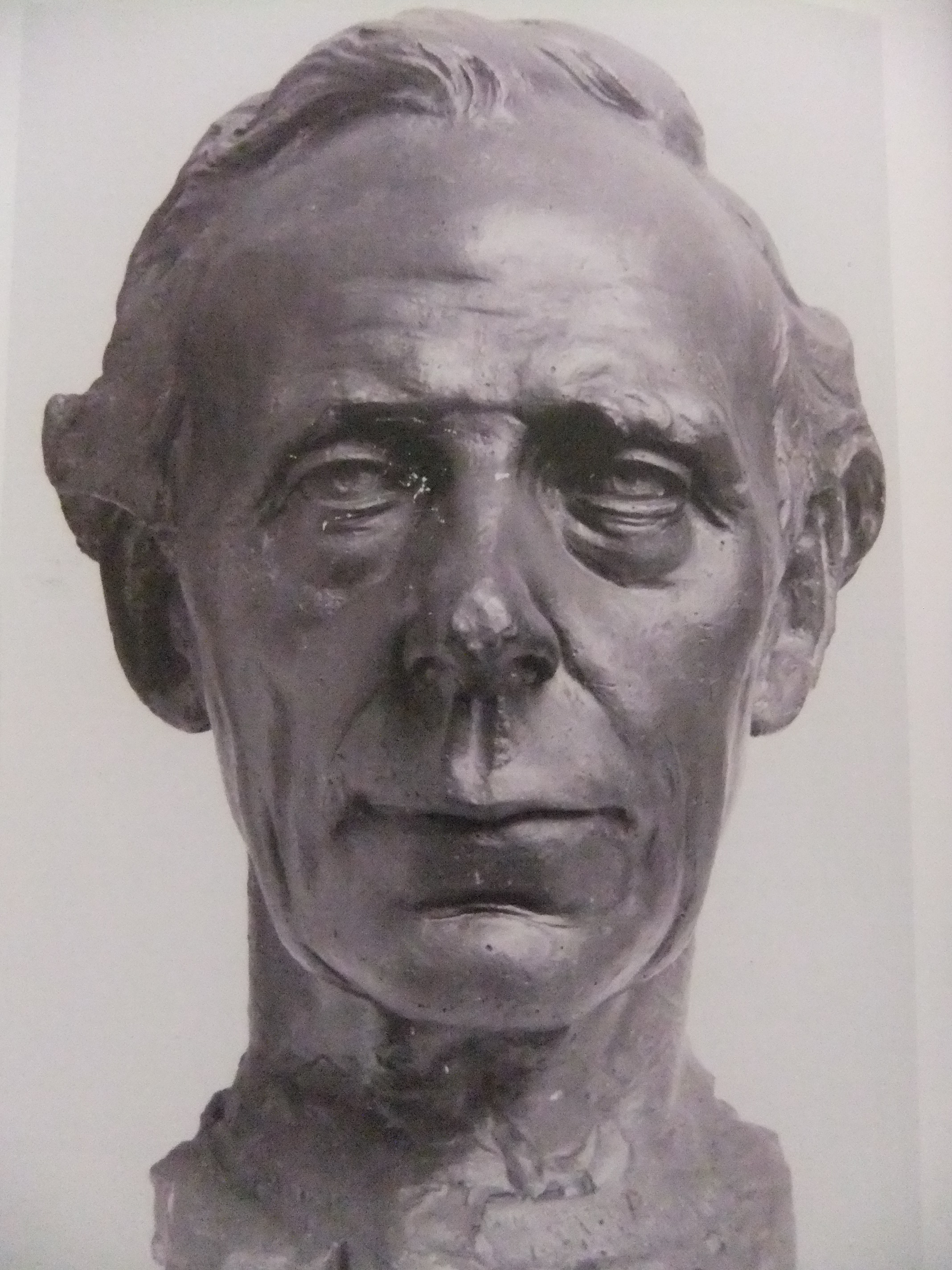
Albert Power’s bust of Archbishop Daniel Mannix (1864–1963), the Irish-born Archbishop of Melbourne and one of the most controversial Catholic churchmen of his era, was made in 1921 during a sitting in London. According to Power’s 1945 obituary in the Sunday Independent, the sitting was arranged “on the initiative of Kathleen Fox,” who was at the same time painting her own portrait of Mannix — the painting that now belongs to the Dublin Municipal Gallery (Dublin City Gallery The Hugh Lane).
Mannix had been a vocal supporter of Irish independence and was a deeply controversial figure for the British authorities — he had been denied landing in his own country during this period, a fact Power’s obituary specifically notes. The sitting in London therefore took on real political weight: an Irish-born Archbishop, barred from his homeland, sculpted by an Irish nationalist sculptor on the initiative of an Irish painter.
Power’s bust of Mannix is now in Melbourne and was described in his obituary as “a masterwork.” It represents one of the more international dimensions of Power’s portrait practice, alongside his work on W.B. Yeats, James Stephens, and Hugh Lane during the same prolific period around 1918–1920.
This sitting occurred on the same trip during which Oliver St John Gogarty brought Power to London to model Terence MacSwiney’s death mask — Power was admitted to Brixton Prison as MacSwiney lay dying on hunger strike, and modelled the patriot’s head “in a piece of wax concealed in his hand.”